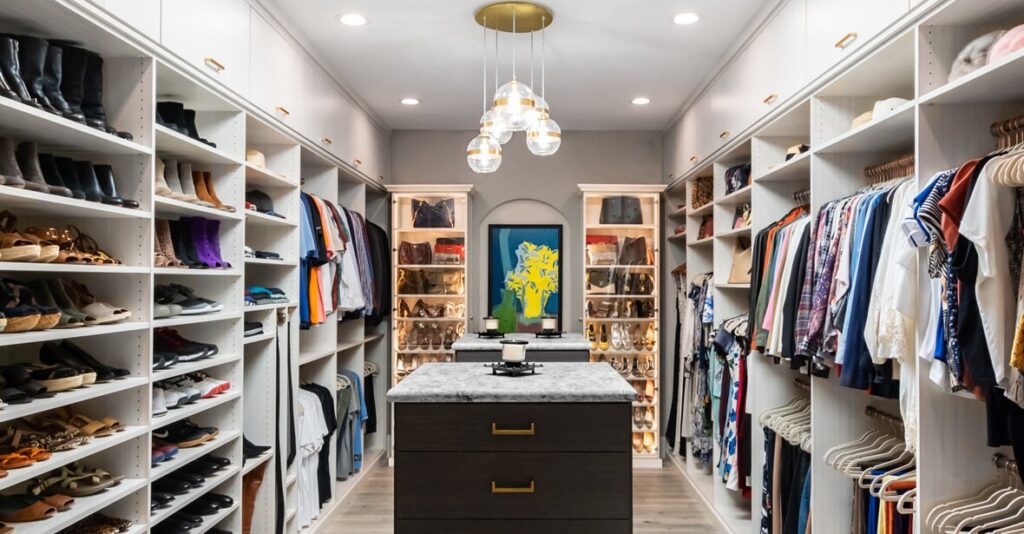
If you have a little extra space in your bedroom, or you’re planning a renovation, a walk‑in closet can be one of the best “luxury‑meets‑practicality” upgrades for your home. In 2025, many Americans are rethinking closets — no longer just storage closets, but stylish, organized, and functional dressing rooms. In this article, we’ll explore top ideas and the latest trends for a walk in closet USA, show real‑life examples, and help you design a closet that’s both efficient and beautiful.
✅ Why Walk‑In Closets Are Trending (and Worth the Effort)
- Better organization & visibility — Instead of cramming clothes and accessories behind closed doors, a good walk‑in closet lets you see everything — what you own, what you need — and access items easily. (Homes and Gardens)
- Saves time & reduces clutter — When everything has a dedicated place (for clothes, shoes, accessories), you avoid rushed mornings or last‑minute wardrobe chaos. (CU Independent)
- Turns storage into style — With thoughtful design — lighting, shelves, drawers, display racks — a closet can feel like your personal boutique rather than a forgotten corner. (PlusMood)
- Flexible & future‑proof — Modular shelving, adjustable rods, clever use of corners or vertical space make closets adapt to changing wardrobes, seasons, or even household size. (Boston Closet)
Because of these reasons, many U.S. homeowners now treat closet design as seriously as living room or kitchen design.
🧰 Key Walk‑In Closet Design Ideas Americans Love (2025 Edition)
Here are the most effective and popular design ideas for walk‑in closets right now:
1. Defined Zones — Divide for Functionality
Organizing a closet by zones makes it much easier to maintain. Typical zones include:
- Hanging clothes (shirts, jackets, dresses)
- Folded clothes / sweaters / jeans
- Shoes & boots
- Accessories: belts, scarves, handbags, jewelry
- Seasonal or off‑season clothing (stored on high shelves) (Homes and Gardens)
Tips:
- Use double‑rod hanging — one rod for shirts/dresses, one for pants/skirts — to maximize hanging space. (completeclosetdesign.com)
- Keep frequently‑used clothes at eye level. Items used less often can go on higher shelves or in bins. (HomeQly.com)
- Assign dedicated spaces: shoes in one section, folded clothes in another, accessories in drawers or cubbies — this reduces clutter and makes everything easy to find. (HGTV)
2. Smart Storage: Shelves, Drawers, and Pull‑Outs
A walk‑in closet becomes truly practical only when storage is thoughtfully designed:
- Built‑in shelving (floor‑to‑ceiling) — Ideal for handbags, folded clothes, boxes, hats, or even storage for suitcases and off‑season items. (PlusMood)
- Drawers & drawer dividers — Great for socks, underwear, jewelry, and smaller items. Soft‑close drawers add a refined feel. (Homes and Gardens)
- Pull‑out shelves / roll‑outs for lower cabinets — Instead of piling items at the back, pull‑outs bring everything forward for easy access (helps with heavy baskets, storage bins, folded items). (HGTV)
- Clear containers or labelled bins — For seasonal clothes, less‑used items, or accessories; clear bins help see contents at a glance. (Boston Closet)
3. Shoe & Accessory Display — Because Every Detail Matters
A well‑designed walk‑in closet treats shoes, bags, and accessories not just as storage items but as visible parts of the overall style. Some options many Americans adopt:
- Wall‑to‑wall shoe shelves or cubbies — dedicated shelves for sneakers, boots, heels, sandals; adjustable shelves handle different heights. (PlusMood)
- Accessory drawers / cubbies — for belts, scarves, hats, handbags. Keeps smaller items organized and easy to grab. (Homes and Gardens)
- Glass‑front or open‑front shelving/display — especially useful for handbags, high‑end shoes, or accessories you want to show off while keeping dust out. (PlusMood)
By designing storage with shoes and accessories in mind, the closet functions both as storage and a display — like a boutique.
4. Use Corners, Vertical Space & Hidden Areas — Maximize Every Inch
Closets often waste corners or upper vertical space. Smart designs reclaim these:
- Corner carousels or angled shelving — converts awkward corners into usable storage for folded clothes, shoes or bags. (HGTV)
- Over‑head shelves or high rods — store off‑season clothes, luggage, seldom‑used bedding or bags. (completeclosetdesign.com)
- Full‑height shelving / cabinetry — floor‑to‑ceiling storage helps use vertical volume, especially good if floor space is limited. (PlusMood)
With vertical and corner storage, even modest‑sized closets feel much larger and more usable.
5. Add Functional & Stylish Elements — Lighting, Mirrors, Islands, Seating
A closet isn’t just about storage — thoughtful extras can make it feel luxurious and comfortable. Popular touches:
- Good lighting — overhead lighting + shelf lighting or LED strips ensures you can see everything clearly. A well‑lit closet reduces outfit mistakes and makes the space welcoming. (glowupmyhome.com)
- Full‑length mirror (or multiple mirrors) — ideal for dressing, outfit checks; mirrors also visually enlarge the space. (spacemanager.com)
- Central island or dresser island (if space allows) — provides drawer storage (for jewelry, accessories), and a surface to fold clothes, plan outfits, or place items temporarily. (PlusMood)
- Seating / small bench / ottoman — helpful for putting on shoes, folding clothes, or just a spot while you decide outfits. A small seating piece makes the closet feel more like a dressing room. (PlusMood)
These features elevate a closet from “storage corner” to “personal dressing room.”
🏠 Real‑Life Walk‑In Closet Setups — What’s Working in U.S. Homes
Here are a few real‑world closet layouts and styles based on what people are doing now (2024–2025) — from compact closets to luxury walk‑ins.
Example 1 — Compact Walk‑In for Apartment + Minimalist Lifestyle
- Floor‑to‑ceiling built‑in shelves on one side for folded clothes, handbags in baskets, and clear bins for off‑season items.
- Double hanging rods on the other wall for shirts/pants.
- Clear plastic or fabric bins labeled seasonally — easy to swap out seasonal clothes.
- Slim shoe rack at the base — shoes organized neatly rather than piled at the door.
Why this works: Even a small closet becomes highly functional using vertical storage, organized bins, and a strict zoning system — ideal for people with limited space but wanting order.
Example 2 — Mid‑Size Walk‑In Closet for Family Use
- A combination: drawers (with dividers) for underwear/accessories, open shelves for folded clothes, double rods for hanging.
- Shoe cubbies for multiple family members; accessories and bags in dedicated shelving.
- Seasonal swap: winter clothes on higher shelves during summer.
- Clear labeling and matching hangers to maintain visual order.
Why this works: With multiple users and more clothing, zoning + modular storage keeps things tidy and accessible for everyone.
Example 3 — Luxurious Boutique‑Style Closet — The “Personal Dressing Room”
- Wall‑to‑wall built‑in cabinetry with a mix of open shelves (for display) and closed drawers.
- Central island with drawers for jewelry, accessories, watches — plus a countertop for outfit planning.
- Floor‑to‑ceiling glass‑front cabinets (or open display shelves) for handbags/shoes, with integrated lighting.
- Full‑length mirror with backlighting, soft ambient closet lighting, maybe even a small seating bench.
Why this works: It elevates a closet from mere storage to a beautiful, functional space — where selecting an outfit feels like browsing a boutique.
🧭 How to Plan YOUR Walk‑In Closet — Step‑by‑Step Checklist
Here’s a simple roadmap to design a walk‑in closet that works for you:
- Measure your space carefully — note ceiling height, wall widths, depth, door swing, any windows.
- Make a list of what you own — how many clothes, shoes, accessories, seasonal items — helps decide shelving vs hanging vs drawers.
- Decide on zones — hanging, folded, shoes, accessories, seasonal storage, maybe a vanity/bench area.
- Choose storage style — built‑in cabinetry, adjustable shelves, drawers with dividers, pull‑outs, clear bins, shoe cubbies, etc.
- Use vertical + corner space smartly — overhead shelves, corner carousels or angled shelves, high rods.
- Add functional extras — good lighting, mirror, maybe a central island or bench; uniform hangers for clean look.
- Consider seasonal rotation — store out‑of‑season clothes up high or in bins to free everyday space. (Homes and Gardens)
- Use matching storage accessories — uniform hangers, matching bins or boxes, clear labels — helps visually declutter and maintain order. (Martha Stewart)
- Plan for flexibility — adjustable shelves, modular units, room to adapt as your wardrobe changes.
- Keep everyday items easily accessible — put daily wear at eye‑level or front; rarely used / seasonal items up high or tucked away.
⚠️ Common Mistakes to Avoid — And What to Do Instead
- Leaving corners empty or unused — wasted space. Instead, use corner shelves or a carousel to utilize corners. (HGTV)
- Over‑crowding closet with too many items — makes it hard to find anything. Better to declutter, use bins, and rotate seasonal clothes. (Homes and Gardens)
- Neglecting lighting or mirror — makes closet dark and impractical. Use layered lighting & a full‑length mirror to enhance function + feel. (spacemanager.com)
- Only using mismatched hangers or random bins — visually messy, clothes can slip or get damaged. Use uniform hangers/bins. (Martha Stewart)
- Building fixed shelving that can’t adapt — wardrobes change, seasons change. Adjustable shelves or modular systems are smarter long‑term. (completeclosetdesign.com)
🌟 Why “Walk in Closet USA” Trend Is Growing — What’s Driving It
- Changing lifestyles & wardrobes — more clothes, more shoes, more seasonal variation. People need better organization as their wardrobes grow.
- Desire for personal space & comfort — a walk‑in closet doubles as a private dressing room, giving you a daily “boutique‑style” experience.
- Focus on efficient use of space — with smaller homes and apartments, smart closet design helps maximize storage without clutter.
- A blend of style and practicality — closets aren’t just storage — they’re part of home design, reflecting taste and lifestyle.
- Flexibility & long‑term value — modular closets grow/adjust as needs change (kids, work wardrobe, seasonal clothing), making them a smart investment.
Final Thoughts — A Walk‑In Closet Is More Than Storage
A “walk in closet USA” isn’t just a practical addition — it’s a space that bridges utility, comfort, and style. Done right, it can make daily routines easier, help you maintain order effortlessly, and even add a touch of luxury to your home.
Whether you opt for a simple closet with organized shelving or splurge on a boutique‑style dressing room with lighting, drawers, and display shelves — the key is thoughtful planning and purposeful storage. With the ideas covered here, you can turn a plain closet into a personal, functional, and stylish retreat that suits your lifestyle.