
If you’re planning or redesigning a kitchen in the U.S.—whether it’s a cozy condo or a spacious family home—getting the layout right can make all the difference. A good kitchen layout not only looks great, but also helps cooking, cleaning, eating and socializing flow smoothly. In this post, we’ll dive into the most popular kitchen layout USA styles today, explain the pros and cons of each, offer real‑life examples, and help you decide which layout might suit your home best.
Why Kitchen Layout Matters in 2025
No matter how expensive your cabinets, appliances, or finishes are — if the layout is wrong, your kitchen will feel cramped, awkward, or inefficient. A well‑designed layout helps:
- Maximize workspace and storage.
- Keep a smooth “workflow” — from refrigerator to prep to stove to sink — often referred to as the “work triangle.” (thespruce.com)
- Fit kitchen into different kinds of homes — apartments, open‑plan flats, family houses.
- Allow for social interaction, entertaining, and modern living habits (kids, guests, multitasking).
- Use space efficiently — especially important in smaller homes.
Because American homes vary so much — from studio condos in NYC to suburban houses in Texas — having a flexible menu of kitchen layout options is more useful than ever.
🔁 The Most Popular Kitchen Layouts in the USA
Here are the key kitchen layouts commonly seen in American homes — each with unique strengths and trade‑offs.
1. One‑Wall / Straight / Single‑Wall Kitchen
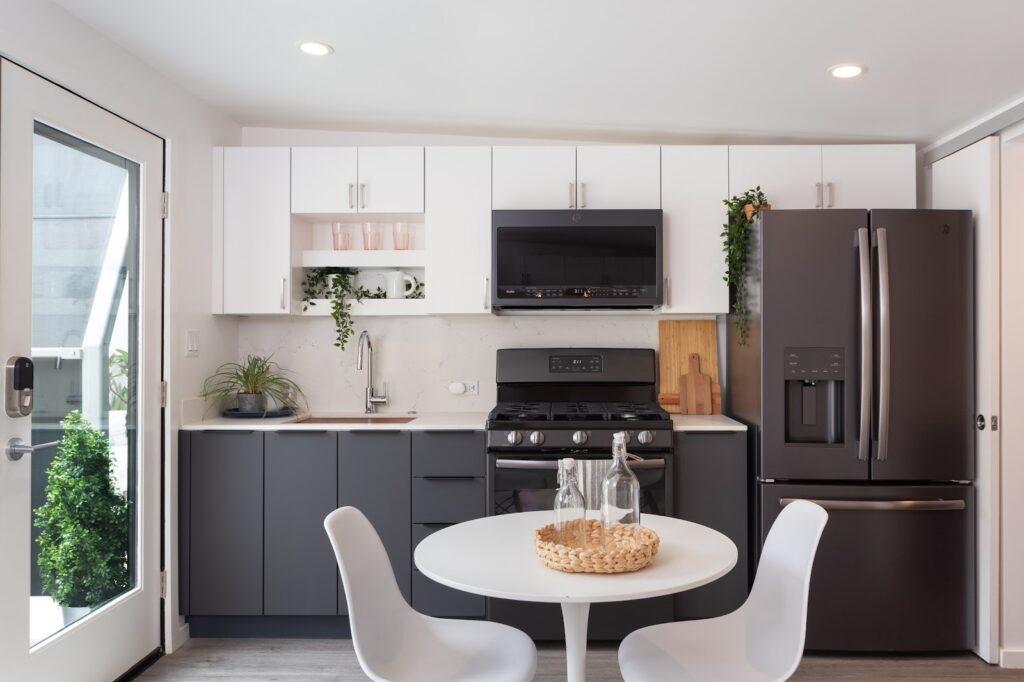
What it is: All cabinets, countertops, and major appliances — stove, sink, refrigerator — are aligned along a single wall. (Curated Interior)
Best for: Small apartments, studio flats, condos, or any space with limited square footage.
Pros:
- Efficient and space‑saving. (HGTV)
- Budget-friendly — simpler cabinetry and fewer materials.
- Easy to integrate into open‑plan living (living room + kitchen).
Cons:
- Limited counter and storage space. (Curated Interior)
- Not ideal for multiple cooks or large households.
- Might feel basic if you do lots of cooking or need storage for many items.
Real‑life example: A small New York City studio — white cabinetry along one wall, slim counters, a combo microwave‑oven, and a narrow island trolley for extra prep/storage. Good for a single cook or a couple who don’t need large kitchen space.
2. Galley / Parallel Kitchen

What it is: Two parallel runs of cabinets and countertops, with a walkway between them — like a corridor kitchen. (Forbes)
Best for: Narrow apartments or smaller homes where space is limited but you still want more storage than a one‑wall kitchen.
Pros:
- Efficient layout for cooking — everything is within easy reach. (Forbes)
- Better storage and counter space compared to a one‑wall kitchen.
- Works well when only one or two people cook.
Cons:
- Not ideal for multiple cooks at once — can feel crowded. (thespruce.com)
- Traffic flow needs careful planning — avoid putting stove and sink directly opposite each other if the walkway is narrow. (Forbes)
- Feels enclosed if there’s no good lighting or ventilation.
Real‑life example: A compact San Francisco apartment — galley kitchen with bright white cabinets, under‑cabinet lighting, open shelves on one side for a modern airy feel, and a narrow breakfast bar at the end for casual dining.
3. L‑Shaped Kitchen
What it is: Cabinets and appliances arranged along two adjacent walls, forming an “L.” (KitchenAid)
Best for: Small to medium kitchens, or open-plan homes where kitchen merges with living/dining area.
Pros:
- Flexible and efficient — good workflow and enough counter space. (Forbes)
- Easy to add an island or breakfast table if space allows — great for social cooking or small gatherings. (Kol-and-Co)
- Opens up kitchen to living/dining, making space feel larger & more integrated.
Cons:
- Corner storage can be tricky — you may need pull‑outs or lazy Susans to use space properly. (Nasdaq)
- For larger cooks/families, might feel limited unless you have generous counter area or add an island.
Real‑life example: A suburban home outside Chicago — L‑shaped kitchen with light wood cabinets, quartz counters, a small island in the middle with bar stools for quick breakfasts, seamlessly opening into the dining area — ideal for family cooking and evening meals together.
4. U‑Shaped Kitchen
What it is: Cabinets and countertops along three walls — creating a “U” shape. (KitchenAid)
Best for: Medium to large kitchens, families, or homes where multiple people cook or use the kitchen together.
Pros:
- Lots of counter space and storage — great for serious cooking or households with many kitchen items. (KitchenAid)
- Efficient workflow — easy movement between sink, stove, and fridge (work triangle) without walking long distances. (KitchenAid)
- Can incorporate an island or peninsula for extra workspace or seating if space permits. (KitchenAid)
Cons:
- In smaller kitchens, the U‑shape can feel cramped or boxed-in. (Forbes)
- Corner cabinets can be hard to access — may require carousel or smart storage solutions. (Forbes)
- Less “open‑plan feel” — might isolate kitchen from living/dining areas unless you leave one side open or use partial walls/glass.
Real‑life example: A farmhouse‑style home in suburban New Jersey — U‑shaped kitchen with a mix of painted lower cabinets and open wooden shelves, large stone countertops, double ovens, and a central island with bar seating. Spacious enough for two people to cook together, and still open toward the dining room.
5. Kitchens with Islands or Peninsulas (Open / Island / Peninsula Layouts)
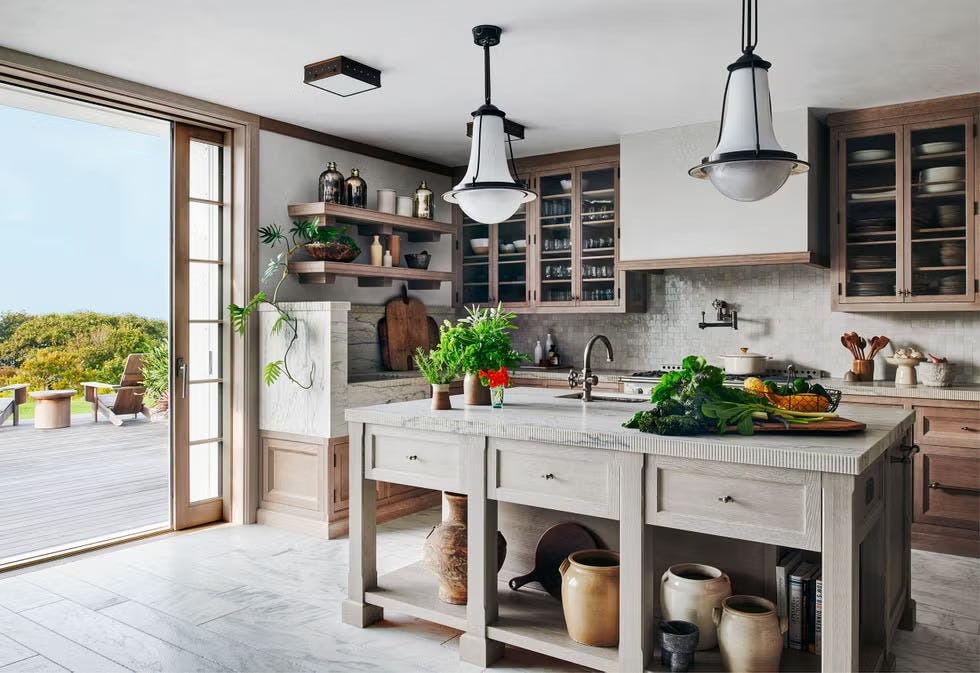
What it is: These layouts add a freestanding island or attached peninsula to a base kitchen layout (L‑shaped, U‑shaped, or even one‑wall), turning the kitchen into a multifunctional hub for cooking, eating, socializing. (Curated Interior)
Best for: Medium to large kitchens, open‑plan homes, families or buyers who entertain guests often.
Pros:
- Provides extra work surface, storage, or casual dining space. (Forbes)
- Makes kitchen a central social hub — guests or family can sit at the island while food is being prepared.
- Great for open‑concept living — island or peninsula helps define kitchen zone without walls.
Cons:
- Requires enough floor space — not suitable for small kitchens. (HGTV)
- Needs careful planning for flow — ensure enough clearance around island so people don’t bump into counters or appliances. (KitchenAid)
- Can get cluttered if storage and organization aren’t well thought out.
Real‑life example: A loft‑style home in Los Angeles — open‑concept kitchen + living area with a large marble-topped island for prep + bar‑style seating; minimal cabinetry, pendant lighting over island; open shelves for cookbooks and décor. Great for cooking and entertaining together.
🧑🍳 How to Choose the Right Kitchen Layout for You
Here’s a quick guide to help you pick the right layout based on your space, needs, and lifestyle:
| Your Situation / Needs | Recommended Kitchen Layout(s) | Why It Works |
| Small apartment / condo / studio | One‑wall / Galley | Saves space, stays functional with minimal footprint |
| Small–medium open‑plan space | L‑shaped (with or without island) | Balanced workflow + opens to living/dining areas |
| Family kitchen, multiple cooks, frequent cooking | U‑shaped / L + Island / U + Island | Ample counters, storage, efficient cooking flow |
| Love to entertain / host guests, need social cooking space | Island / Peninsula / Open layout with Island | Offers seating, casual dining and social cooking environment |
| Narrow or long kitchen/passage | Galley | Efficient, linear use of space; easy to organise |
| Budget or simple kitchen build | One‑wall / Straight layout | Affordable, less cabinetry, easier installation |
📐 Real‑Life Scenarios: Kitchen Layouts in Different Homes
Scenario 1 — Compact City Apartment (Chicago / NYC‑style)
A 600–700 sq ft apartment with a small kitchen area. Best suited for a one‑wall or galley kitchen. Add compact appliances, slim storage solutions, and perhaps a portable island/cart for extra prep space. Makes cooking and everyday life manageable despite limited space.
Scenario 2 — Suburban Family Home with Medium Space
With a 10 × 12 ft or larger kitchen area, an L‑shaped kitchen with island offers balance: enough countertop and storage, flexible flow, and potential for a breakfast bar or casual dining. Ideal for families or couples who cook regularly.
Scenario 3 — Large Home or Open‑Plan Layout (Loft / Open Living)
For a spacious home with open-plan design, a U‑shaped layout with island or Open‑plan kitchen with island/peninsula works best. Plenty of storage, multiple cooking zones, and social cooking/entertaining space. Also suitable for multiple cooks — perfect for shared homes or families.
Scenario 4 — Narrow / Long Apartment or House Kitchen
If the kitchen is narrow or corridor‑style, a galley layout optimizes space and workflow. Light-colored cabinets, good lighting, and open shelving or reflective surfaces help avoid a cramped feel.
✅ Key Trends & Tips for 2025 Kitchen Designs in USA
When designing or renovating a kitchen today, many American homeowners are leaning toward these broader trends:
- Flexible, multi-purpose kitchens — kitchens that work for cooking, eating, socializing, even working. Island or open-plan layouts help. (Nasdaq)
- Open kitchen + living/dining integration — especially in modern apartments or loft‑style homes. (HGTV)
- Smart storage and modular cabinetry — to maximize space especially in L, U or galley kitchens. Corner carousels, pull‑outs, optimized cabinet layouts. (KitchenAid)
- Island or peninsula as social & functional hub — used for dining, prep, storage, and socializing. (Curated Interior)
- Adaptable designs for multiple lifestyles — whether you’re single, a couple, a family, or often host guests — a good layout can adjust.
⚠️ Beware of Common Mistakes & What to Avoid
- Squeezing too many appliances or cabinets into small kitchens — leading to cramped, inefficient workflows (especially in galley or one‑wall kitchens).
- Poor circulation around islands or peninsula — if space around island is too tight, cooking becomes a hassle.
- Ignoring storage planning — especially corners in L or U‑shapes can become wasted unless smart storage is used.
- Designing for looks only, not practicality — flashy kitchens with little functionality may feel disappointing long term.
- Overlooking natural light and ventilation — small or enclosed kitchens especially need light and airflow for comfort.
Final Thoughts — Choose Layout, Then Style & Function
The most beautiful kitchen in the world won’t work well if its layout is wrong. For any kitchen renovation or design project in the USA, start with the right kitchen layout USA, considering space, lifestyle and future needs. Once the layout is solid, you can build your style — modern, classic, rustic, minimal, or high‑tech — on that foundation.
Whether you pick a compact one‑wall kitchen for a small city flat or a spacious U‑shaped with island kitchen for a large suburban home, planning layout first ensures you end up with a kitchen that’s not just good-looking, but practical, pleasant, and long‑lasting.