
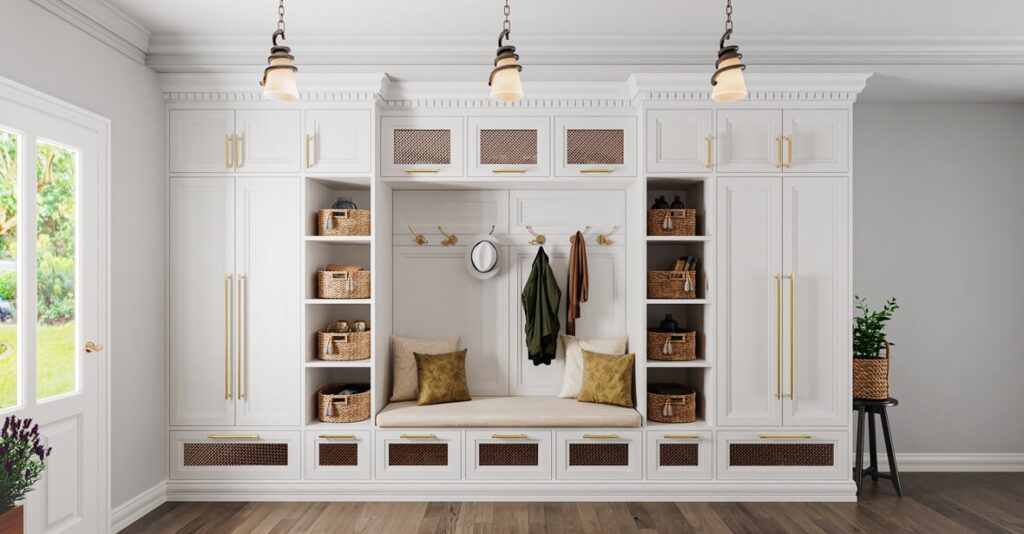
If you want to keep dirt, clutter, shoes and coats from taking over your home — a well‑designed mudroom (or entryway drop zone) can make a huge difference. In the USA today, a growing number of homeowners are rethinking mudrooms: turning them from chaotic entry‑points into tidy, organized, practical spaces. With the right “mudroom design USA” ideas, you can create a smart storage hub that works for your family’s everyday life.
In this article: we explore the most effective and trending mudroom storage ideas in 2025, share real‑life examples, and give you step‑by‑step guidance to build a mudroom that’s both functional and welcoming.
Why Mudroom Storage Matters — More Than Just a Place to Kick Off Shoes
Everyone who enters the house passes through the mudroom — shoes, jackets, bags, maybe even backpacks after work or school. Without proper storage, a mudroom becomes clutter central: shoes strewn, coats on chairs, bags on the floor, and mess spreading into living spaces.
But with smart storage and careful design, a mudroom can:
- Keep dirt, mud and wet shoes contained near the entry — protecting the rest of your home from mess; (completeclosetdesign.com)
- Provide designated spaces for each family member — so everyday items don’t pile up “just anywhere.” (Homes and Gardens)
- Make everyday tasks easy — a place to sit down and remove shoes, hang coats/bags, store seasonal gear, outdoor items, or pet supplies. (Julie Blanner)
- Transform entry clutter into a welcoming, organized zone — the first impression for guests, and the last stop before you leave home. (Homes and Gardens)
Because of that, good mudroom storage is more than convenience — it’s a small investment that pays off in daily comfort and cleanliness.
🧰 Top Mudroom Storage Ideas Americans Love in 2025
Here are the most popular, practical and stylish mudroom storage ideas that many U.S. homes are adopting this year — ranging from small entryways to full-sized mudrooms.
1. Bench Seating with Built‑in Storage
One of the most useful and widely adopted features is a storage bench: a place to sit while removing shoes — with storage underneath for boots, shoes, bags, or seasonal items. (Real Homes)
Why it works:
- Provides a seat — great for older adults, kids, or simply comfort while tying shoes. (Homes and Gardens)
- Hidden storage — flip-up benches or benches with drawers/compartments keep clutter out of sight. (closets4lessbucks.com)
- Efficient use of space — especially helpful in narrow hallways, entryways, or smaller homes. (completeclosetdesign.com)
Design tips:
- Use a bench with lift-up seat or deep drawers rather than shallow storage to maximize capacity. (closets4lessbucks.com)
- Combine with a shoe storage shelf or cubbies below seat to keep footwear organized. (Real Homes)
2. Wall Hooks, Peg Rails & “Drop Zones” for Coats, Bags, Leashes
Hooks mounted on the wall are simple but among the most effective mudroom storage additions. They give a place for coats, jackets, hats, bags, umbrellas, or dog leashes — ready to grab when you head out. (Homes and Gardens)
Advantages:
- Instant grab‑and‑go convenience — no need to dig into closets when in hurry. (Homes and Gardens)
- Great for small or narrow spaces — hooks take almost no floor space but add lots of storage. (completeclosetdesign.com)
- Low‑cost and easy to install — an affordable way to boost organization without heavy renovation. (Julie Blanner)
Pro tips:
- Use sturdy hooks — spaced well and at different heights (for adults & kids). (Julie Blanner)
- Combine hooks with overhead shelf or cubbies for hats, gloves, seasonal gear, or quick‑grab items. (Architectural Foundation)
3. Built‑In Cubbies / Lockers / Personalized Compartments
For households with more people — kids, spouses, roommates — built-in cubbies or lockers with individual spaces are becoming popular. Each person gets a spot for shoes, jacket, backpack, hat — leaving little reason for clutter to spill outside the mudroom. (Real Homes)
Benefits:
- Creates “ownership” of space — easier to keep things organized. (Real Homes)
- Ideal for schools, sports, work gear, bags — good for parents with kids or busy families. (Jiffy Junk)
- Helps manage seasonal gear — jackets, raincoats, boots — without cluttering living spaces. (Architectural Foundation)
Design ideas:
- Tall lockers (with doors) for a cleaner look, or open cubbies for easy access / quick use. (Real Homes)
- Add nameplates or personal baskets for each family member to further personalize and organize. (completeclosetdesign.com)
4. Shoe & Boot Storage — Drawers, Pull‑Out Racks, Shoe Towers
Shoes and boots are the main challenge in many mudrooms — wet, muddy, bulky, and messy. Smart storage solutions like pull-out drawers, vertical shoe towers, or dedicated racks help manage footwear neatly. (closets4lessbucks.com)
Key benefits:
- Keeps wet or muddy shoes off floors — good for safety and cleanliness. (threshold-construction.com)
- Makes use of vertical space — especially useful when floor space is limited. (completeclosetdesign.com)
- Makes it easier to dry shoes if airflow is good (boots, rain shoes) instead of piling them in a corner. (closets4lessbucks.com)
Design suggestions:
- Use slatted or ventilated shelves/ drawers to allow airflow. (closets4lessbucks.com)
- Combine with a boot tray or waterproof mat for rainy or muddy weather to catch water/drips. (threshold-construction.com)
5. Overhead and Vertical Storage — Use Height That Often Gets Ignored
Many mudrooms under‑utilize the vertical space. Shelves or cabinets that go up to the ceiling, overhead cubbies, or tall lockers — are now a common way to store seasonal gear, less‑used items, cleaning supplies, pet gear, or backyard/outdoor tools. (Homes and Gardens)
Why vertical storage makes sense:
- Frees up floor space — ideal for small entryways. (completeclosetdesign.com)
- Good for items you don’t need every day — winter gear in summer, sports equipment, pet supplies, seasonal boots, etc. (Jiffy Junk)
- Makes the mudroom more flexible — you can re‑organize shelves or cubbies as needs change. (completeclosetdesign.com)
Tips for installation:
- Install sturdy cabinetry or shelves up to ceiling if space allows. (threshold-construction.com)
- Use labeled bins or baskets — easier to grab when needed, easier to keep organized. (Architectural Foundation)
6. Mixed-Use and Multi-Functional Units — Lockers + Seating + Storage in One
Especially in small mudrooms or entryways, multi-functional furniture or units (bench + hooks + cubbies + closed storage) are getting popular. These provide many functions without needing much space. (Real Homes)
Advantages:
- Consolidates multiple storage needs (coats, shoes, bags, seating) in one footprint. (Real Homes)
- Great for small homes, apartments, or tight hallways — no need for separate bench, locker, shelf & rack. (completeclosetdesign.com)
- Keeps things tidy — fewer loose items, everything has a place, easier to maintain. (Jiffy Junk)
Examples of multi-use units:
- Hall tree / entryway bench with coat rack, storage shelf and shoe tray below. (rebootmygarage.com)
- Modular wall systems: bench with overhead storage, hooks, cubbies — customizable to family needs. (Real Homes)
7. Durable Flooring & Easy-Clean Surfaces — Practical but Often Overlooked
Because mudrooms see wet shoes, rainy boots, dirt from outdoors — flooring and surfaces in this zone need to be resilient. Many homeowners now opt for tile, waterproof vinyl, or easy‑clean materials for floors and benches. (Suite 101)
Why it matters:
- Handles mud, water, snow — easier to clean and maintain than carpet or regular wood flooring. (completeclosetdesign.com)
- Long-term durability — mudroom often becomes a high-traffic area; flooring needs to stand up to wear and tear. (Suite 101)
- Practicality over aesthetics — though with modern designs, you don’t need to compromise on looks. (Homes and Gardens)
🏡 Real‑Life Mudroom Storage Setups — What People Are Building in 2025
Here are some real-life mudroom storage setups from U.S. homes — different sizes, different needs — showing how the above ideas can come together.
Example 1 — Compact Apartment Entryway Turned Mudroom
- Slim wall-mounted hooks for coats and bags.
- A narrow bench with storage underneath for shoes and boots.
- Shoe tray / boot mat to catch mud and water.
- Vertical shelf or small overhead cabinet for hats, gloves, mail, or pet leashes.
Why it works: Makes small space functional with minimal floor footprint. Great for renters or condo dwellers who don’t have a dedicated mudroom — just a small entry or hallway.
Example 2 — Family Home Mudroom with Lockers & Built‑In Storage
- Built-in cubbies or locker units — one section per family member (jackets, backpacks, shoes).
- Bench with pull-out storage below or closed cabinets under seating.
- Overhead shelves for seasonal gear (winter coats, rain boots, sports equipment).
- Shoe storage drawers or ventilated cubbies to keep footwear organized and dry.
- Durable tile or vinyl floor to handle snow, rain, dirt — easy to clean.
Why it works: Manages high usage — daily shoes/jackets for multiple people, school gear, sports bags, seasonal changes. Keeps the rest of the house clean by removing outdoor mess at the door.
Example 3 — Pet‑Friendly + Utility‑Inclined Mudroom
- Mudroom with hooks for pet leashes, built-in drawers for pet supplies (towels, brushes, food, water bowls).
- Boot/ shoe storage to keep muddy outdoor boots away from living room.
- Waterproof or easy-clean flooring for mud, paw prints, wet gear.
- Shelves or overhead storage for outdoor gear: raincoats, umbrellas, garden gloves, rain boots.
Why it works: Combines pet care needs with everyday mudroom functionality — convenient for dog owners or households with active outdoor lifestyles.
✅ How to Plan Your Own Mudroom — Step‑by‑Step Guide
If you’re ready to build or reorganize a mudroom, here’s a simple roadmap to follow:
- Assess your space — measure entryway, hallway, or room; check width, height, floor condition, door swing.
- List your storage needs — coats, shoes, bags/backpacks, seasonal gear, sports equipment, pet gear — how many people use this space.
- Decide on core elements — bench (with storage), hooks, shoe storage, overhead / vertical storage, flooring.
- Choose storage type based on space & use — built-in lockers if you have room, narrow benches or wall‑mounted hooks if space is limited.
- Plan for ease & cleanliness — waterproof or easy‑clean floor, ventilated shoe storage, boot tray if needed.
- Add personal touches — labeled cubbies for family members, baskets for quick‑grab items, decorative hooks or storage bins to match your home’s style.
- Think long‑term flexibility — allow for seasonal gear rotation, future kids or pets, or changing family lifestyle.
- Mix closed and open storage — closed for clutter control (bags, boots, oversized items), open for everyday usage (jackets, shoes, quick items).
- Use vertical & overhead space — shelves or cabinets up to ceiling, overhead bins, wall‑mounted units — to not waste any usable space.
- Allocate a “drop zone” for each person — helps maintain order, especially in busy households.
⚠️ Common Mistakes to Avoid (and What to Do Instead)
- Using tiny “decorative hooks” only — they may not hold heavy coats or bags, and clutter piles up quickly. Instead, choose sturdy hooks, spaced properly, and combine with storage bins or cubbies. (Homes and Gardens)
- Neglecting shoe/boot storage — leaving shoes by the door invites mess. Use racks, ventilated drawers or cubbies, or boot trays. (completeclosetdesign.com)
- Ignoring vertical space (ceiling, walls) — remnants of overhead storage waste valuable room. Install shelves or cabinets high up instead. (threshold-construction.com)
- No seating — not helpful when putting on shoes or boots — even a small bench helps. (Real Homes)
- Choosing materials that are hard to clean or absorb moisture (like carpet) — mudrooms get messy. Use waterproof or easy‑clean flooring/materials. (Suite 101)
🌟 Why “Mudroom Design USA” Is Trending in 2025
- Families & homeowners want organized entryways to handle busy lifestyles — work, school, pets, outdoor gear. Mudrooms help contain the chaos. (Real Homes)
- There’s growing emphasis on functionality + style — mudrooms are no longer hidden utility spaces; they’re part of home décor, often designed with color, materials, and clean lines. (House Beautiful)
- Urban living, smaller homes & apartments — creating efficient compact mudroom setups (entryway hooks + bench + vertical storage) helps maximize space without sacrificing neatness. (completeclosetdesign.com)
- Need for versatility — mudrooms are now pet‑friendly, gear‑friendly, and often double as laundry, coat room, outdoor‑gear station, or entry storage, adapting to family needs. (Jiffy Junk)
Final Thoughts — A Mudroom That Works for You (Not Against You)
A good “mudroom design USA” isn’t about luxury — it’s about smarter use of space, thoughtful storage, and daily ease. Whether you live in a small apartment or a big suburban home, a mudroom planned with hooks, benches, cubbies, shoe racks, and maybe even pet‑gear storage can transform your entry — from messy chaos to organised calm.
Take inventory of what you need, plan zones, use vertical space, and balance closed and open storage. With that, you’ll end up with a mudroom that doesn’t just store things — it brings order to your home and peace of mind to your daily life.
If you like — I can also build a gallery of 8–12 mudroom storage design ideas (2025 USA style) to show different styles: farmhouse, modern minimalist, pet‑friendly, compact apartment nook — to help you pick what fits your home best.
Do you want me to build that gallery for you now?