
Ceilings in 2025 are no longer “just there.” They’re becoming design features — statements of style, mood, and even practicality. If you’re renovating or redecorating, paying attention to ceiling design USA is a smart move. This guide explores the top ceiling trends in American homes, why they’re popular, how to pick one that fits your home, real‑life examples, and practical advice.
Why Ceilings Are Getting More Attention (and Should Get Yours Too)
For decades, ceilings were background surfaces — usually flat, painted white, and ignored. But several shifts have changed that:
- Interiors are increasingly about holistic design, where every surface — floor, wall, ceiling — contributes to the look and feel.
- Homeowners want character and depth. A creative ceiling can add dimension and visual interest without crowding the room.
- Practical factors — like lighting, acoustics, insulation, and space perception — make ceilings a functional asset, not just decorative.
- Social media and home‑inspiration content often celebrate ceilings as the “fifth wall,” pushing more people to reconsider their overheads.
Because of this, 2025 sees ceilings becoming canvases — of texture, structure, color, light, and even art. (Spacejoy)
Top Ceiling Design Trends in 2025 (USA & Beyond)
Here are the ceiling design ideas making waves in 2025 — each offering a distinct mood and purpose.
### 🎯 1. Coffered, Tray, and Layered Ceilings — Depth, Character & Classic Elegance
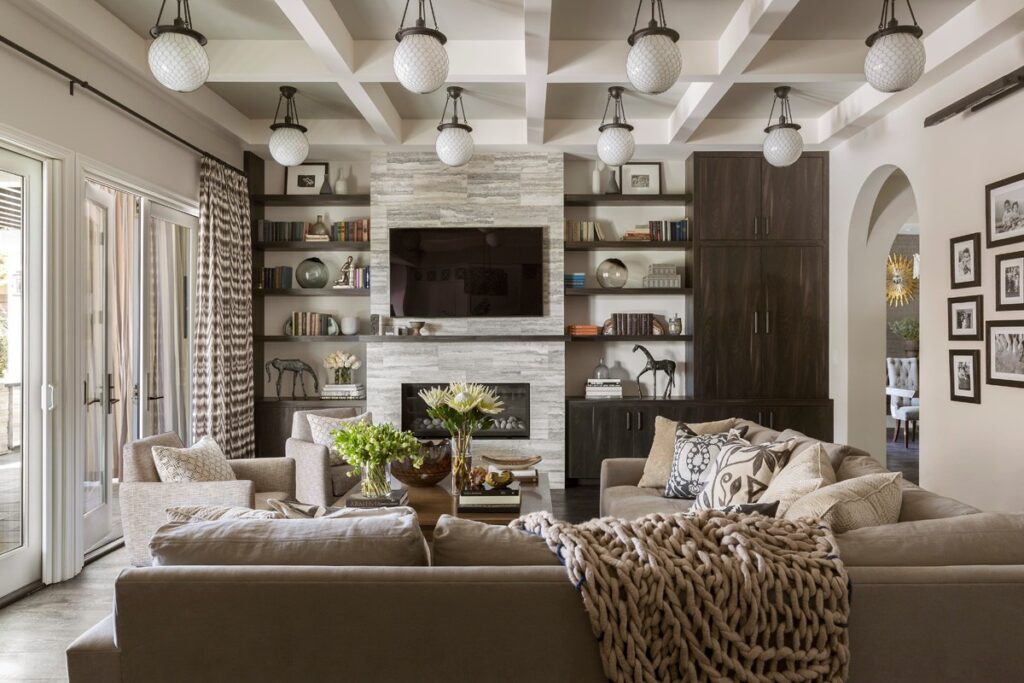
- What it is: Coffered ceilings feature a grid of recessed panels; tray ceilings have a raised central portion (or multiple “levels”), adding architectural interest. In 2025, these are being revived with cleaner lines and modern finishes. (blinkinterior.com)
- Why it works: They add height illusion, draw eyes upward, and give rooms a sense of subtle grandeur — great for living rooms, dining areas, master bedrooms.
- Style tips: Pair a tray/coffered ceiling with soft LED cove lighting for a warm glow. Use on larger rooms or spaces where you want a refined vibe.
### 🌿 2. Wooden Beams & Wooden Panel Ceilings — Warmth, Texture & Natural Feel
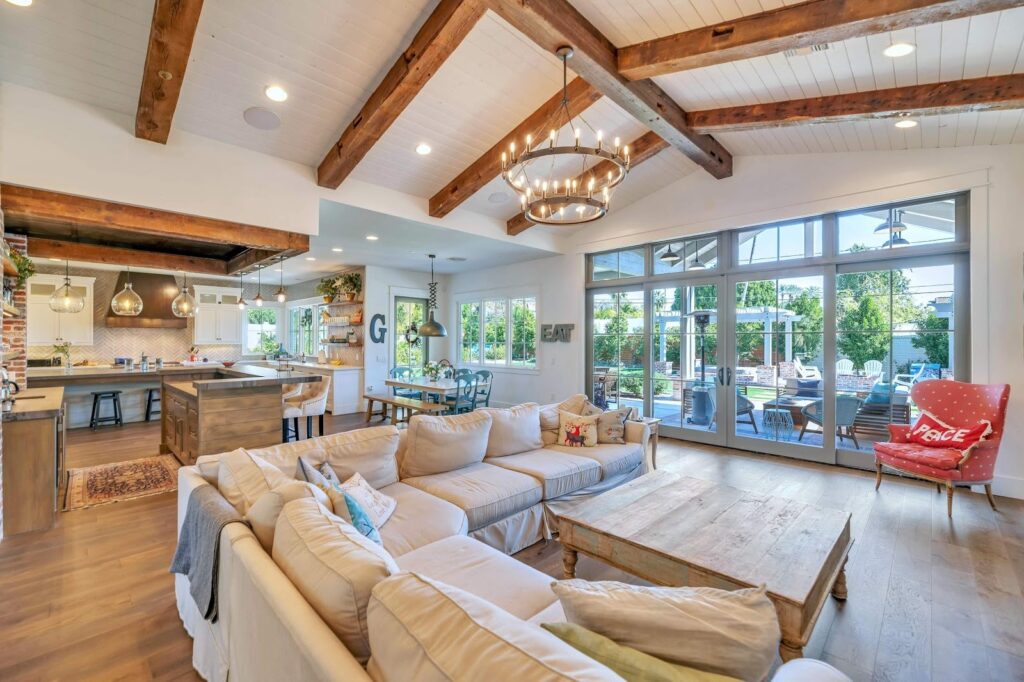
- What it is: Exposed beams (real or faux), wood planks or panels covering part or all of the ceiling. In 2025, warm natural wood ceilings are trending, blending rustic charm with modern interiors. (blinkinterior.com)
- Why it works: Wood adds warmth, texture, and a cozy, grounded character to spaces. It’s especially popular in living rooms, bedrooms, and kitchens with a farmhouse, natural, or organic‑modern vibe.
- Style tips: Use lighter woods (oak, maple) in modern homes for brightness; darker woods in traditionally styled or cozy interiors. Match wood-ceiling color with floors or furniture for harmony.
### ✨ 3. Statement Ceilings: Color, 3D Panels & Textured Finishes — Ceilings as Art
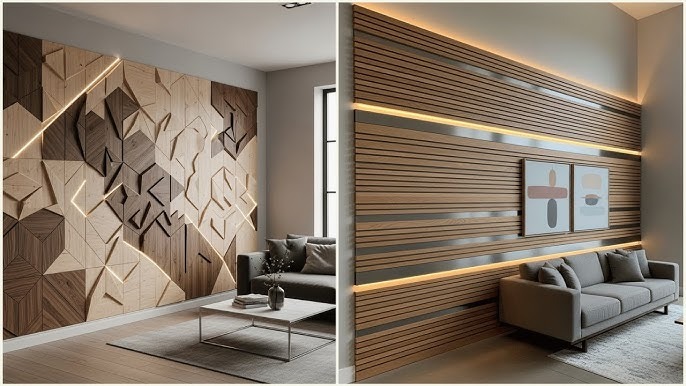
- What it is: Ceilings painted in bold colors (navy, forest green, terracotta), finished with textured plaster, clad in 3D panels, or given metallic/reflective treatment. (Spacejoy)
- Why it works: These make the ceiling a centerpiece, not just a background. They add drama, personality, and depth — particularly effective in minimalist or modern interiors.
- Style tips: Use bold or textured ceilings in a single room or only a portion, so the effect doesn’t overwhelm. Combine with simple walls and minimal décor to let the ceiling shine.
### 💡 4. False Ceilings, Suspended Systems & Integrated Lighting — For Function + Style
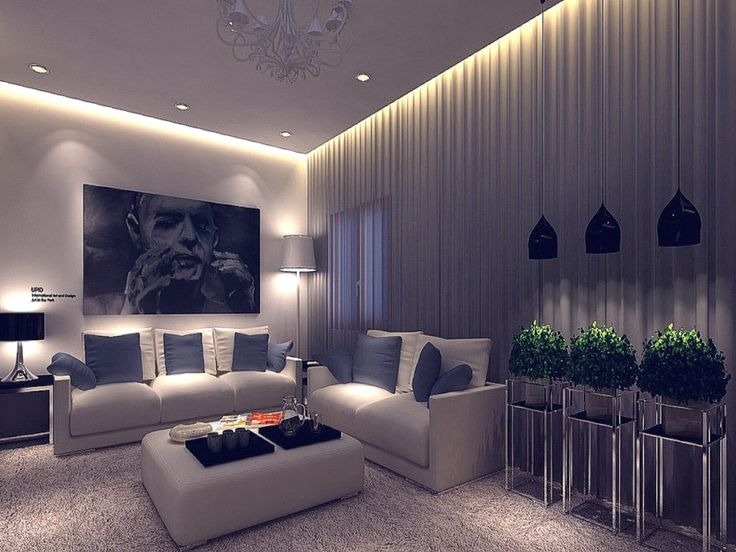
- What it is: Gypsum / POP ceilings, suspended or dropped-ceiling systems, soffit ceilings, ceilings with integrated LED lighting, and layered false‑ceiling designs. (floraviadecor)
- Why it works: They hide wiring, ductwork, and imperfections, improve lighting control, and allow for modern layouts and smart‑home integration. Great for apartments or homes with many electrical/plumbing needs.
- Style tips: Combine with hidden LED strips for soft ambient light. In small rooms, use a minimal false ceiling to create a clean, tidy look.
### 🌌 5. Nature‑Inspired Ceilings: Acoustic Panels, Eco Materials, and Sustainable Designs
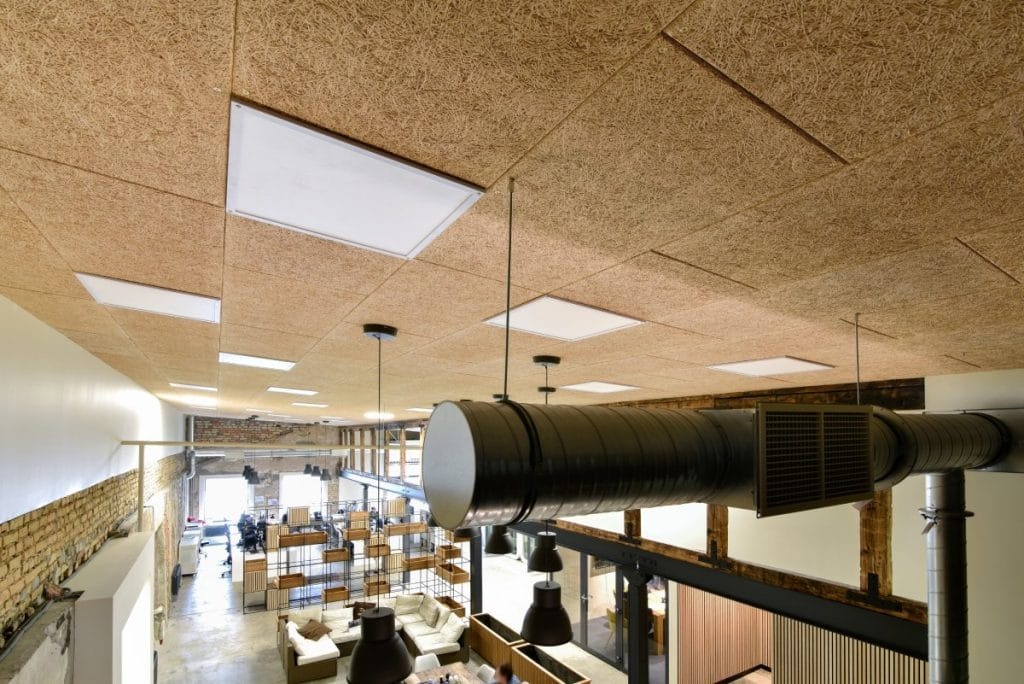
- What it is: Ceilings using sustainable or eco‑friendly materials — wood wool panels, recycled wood or bamboo, acoustic baffles for sound absorption, and sustainable wood slats. (The Uniceil)
- Why it works: For homeowners concerned about sustainability, indoor air quality, or acoustics (especially in apartments), these ceilings offer function plus natural aesthetics.
- Style tips: Use in living rooms, home offices, or media rooms to improve sound and comfort. Combine with natural décor, houseplants, and warm lighting for a cohesive organic feel.
Real‑Life Examples to Inspire You
Here are a few scenarios where U.S. homeowners are already adopting these ceiling design trends.
Example 1 — Modern Suburban Living Room with Coffered Ceiling & Cove Lighting
A family in suburban Virginia renovated their living area with a simple white coffered ceiling and soft LED cove lighting around the recess. With neutral walls and minimal décor, the ceiling added elegance and subtle depth — making the room feel larger and more defined without clutter.
Example 2 — Loft‑Style Apartment with Exposed Wood‑Beam Ceiling & Minimalist Décor
In a loft apartment in Portland, OR, the owners kept exposed timber beams but painted the rest of the ceiling white. Combined with light wood flooring, simple furniture, and large windows, the space felt airy but warm — a mix of industrial and natural, perfect for urban living.
Example 3 — Contemporary Home Office with Acoustic Panel Ceiling
A home office in California uses recycled PET felt acoustic baffle ceiling panels — reducing echo and increasing comfort while adding a modern, structured overhead surface. Paired with good natural light, wood furniture, and houseplants, the room became a productive but cozy workspace — a trend many remote workers are embracing in 2025.
Example 4 — Bedroom with Bold Painted Ceiling for Dramatic Effect
In a master bedroom renovation in Texas, homeowners painted the ceiling a muted forest‑green (instead of white), kept walls off‑white, and used warm lighting. The result: a cozy, enveloping vibe that makes the space feel intimate and grounded. Perfect example of “ceiling as fifth wall.”
How to Choose the Right Ceiling Design for Your Home — Decision Guide
Here’s a quick decision flow to help you pick a ceiling design based on room, purpose, and style:
| Room / Goal | Recommended Ceiling Style |
| Living room / dining room — add elegance | Coffered or tray ceiling + cove lighting |
| Loft/industrial / rustic home | Exposed wood beams or wood‑panel ceiling |
| Small room / apartment / limited height | Minimal false ceiling with integrated lighting |
| Need better sound / eco‑friendly / sustainable | Acoustic / wood‑wool / recycled‑material ceiling |
| Want statement in a modern home | Bold painted or 3D‑panel ceiling or textured ceiling |
| Mix of practicality + aesthetics | Suspended ceiling or soffit ceiling with hidden lighting |
Tips before you start:
- Consider room height — heavy beams or layered ceilings work best with enough vertical space.
- Factor natural light: dark ceilings in low-light rooms can make spaces gloomy.
- Think maintenance & cleaning — textured or wood ceilings may need more care than flat paint.
- Budget lighting and wiring needs — integrating LEDs or smart lights may require pre-planning.
Common Mistakes to Avoid When Designing Ceilings
- Overdoing the ceiling: making every room a “statement ceiling” can overwhelm the home — restraint gives better long-term appeal.
- Ignoring proportions: heavy beams or deep coffers in low-height rooms make spaces feel cramped.
- Mismatched style: a rustic wooden ceiling looks out of place with ultra‑modern furniture unless carefully balanced.
- Neglecting acoustics or insulation: some ceiling types (metal, dropped ceilings) can worsen echo or heat/cold transmission if not planned well.
- Poor lighting — or none: interesting ceilings need good lighting to show off their depth and texture. Without it, the effect can be lost.
Where to Source Materials & Contractors in the U.S.
- Gypsum / POP ceiling specialists — for coffered, tray, or false ceilings with integrated lighting. Many local contractors or home‑improvement stores (Home Depot / Lowe’s) offer these services.
- Wood suppliers / carpenters — for exposed beams, wood‑panel ceilings, or wood slats. Look for companies offering real wood or reclaimed wood for better warmth and authenticity.
- Acoustic ceiling and sustainable‑material vendors — for PET felt baffle panels, wood‑wool panels, acoustic tiles — useful for eco‑conscious or sound‑sensitive homes.
- Lighting stores / smart‑home retailers — for LED cove lights, integrated ceiling lighting, and smart ceiling-light control.
- Interior‑design studios / custom ceiling panel makers — for statement ceilings with 3D paneling, metallic finishes, or artistic installations.
Final Thoughts — Why 2025 Is a Great Year to Rethink Your Ceiling
In 2025, ceilings are finally getting their due. Great ceilings do more than hide wiring — they define mood, add depth, improve acoustics, and lift the overall design of a home. Whether you decorate for comfort (wood beams, acoustic panels), elegance (coffered ceilings, tray ceilings), or boldness (colored ceilings, 3D panels), there’s a ceiling style to match every taste and home type.
If you’re renovation‑ready or just thinking about interior upgrades, don’t ignore what’s above you. A well‑designed ceiling might just change how your whole home feels.